How to Choose a Pet Bottle Baling Machine in 2026?
Choosing a Pet Bottle Baling Machine in 2026 requires more than comparing prices and motor power. A busy recycling facility needs predictable bale density, safe operation, and simple maintenance. Bottles arrive wet, crushed, dusty, or mixed with caps. The machine must handle these changing conditions without constant stoppages.
“Capacity is useful only when the baler remains reliable under real material conditions,” says Daniel Mercer, a recycling equipment consultant with experience in PET recovery systems. His point deserves attention. A machine rated for 1,500 kilograms per hour may perform differently with loose bottles, uneven feeding, or limited conveyor space. Published capacity is not the whole story.
Look closely at chamber size, hydraulic pressure, wire or strap compatibility, bale weight, and power consumption. Ask how quickly operators can clear a jam. Check whether wear parts are locally available. A five-minute repair can matter more than an impressive specification sheet. It can also reduce missed collection schedules and unnecessary labor.
Safety matters.
Choose guarded access points, emergency stops, stable controls, and clear operating instructions. Request videos of similar installations, not only polished factory demonstrations. Speak with users who process comparable bottle volumes. Their complaints may reveal more than a brochure.
There is no perfect checklist. I have seen buyers focus heavily on output, then regret ignoring feeding consistency and service response. The best Pet Bottle Baling Machine fits the entire workflow, from receiving floor to truck loading. In 2026, practical evidence should guide the final decision.
What Is a PET Bottle Baling Machine and How Does It Work?
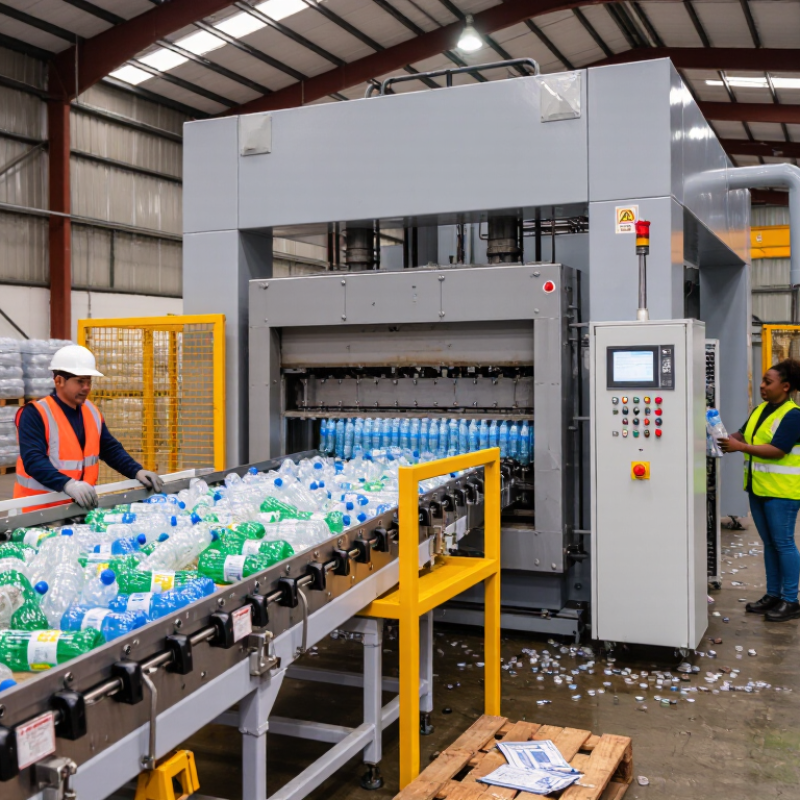
A PET bottle baling machine compresses loose bottles into dense, stackable bales. It reduces storage space and makes transport more efficient. Most systems use a conveyor, compression chamber, hydraulic ram, and automatic binding unit. An operator feeds sorted bottles into the chamber. The ram applies strong pressure and removes trapped air. Wire or plastic strapping then holds each bale together. Simple in theory.
According to the OECD’s Global Plastics Outlook 2022, only 9% of global plastic waste was recycled in 2019. PET recovery remains important because bottles have established recycling value, but contamination still lowers bale quality. NAPCOR’s 2022 PET Recycling Report recorded a 24.9% PET bottle recycling rate in the United States. These figures show why reliable sorting and compaction matter.
When choosing a machine in 2026, compare real throughput, not only catalogue claims. Test wet, crushed, and label-heavy bottles before purchasing. Bale density affects transport costs and downstream processing. Check chamber size, power consumption, binding speed, noise, and access for maintenance. Safety sensors and emergency stops deserve serious attention. A machine may look efficient on paper, yet perform poorly with irregular bottle flow. I would also question extremely high capacity promises. Actual results depend on material preparation, operator skill, and daily maintenance.
How to Assess Your PET Bottle Volume and Baling Requirements
Before choosing a PET bottle baling machine, measure your actual feedstock for seven consecutive days. Record bottles received, rejected containers, loose weight, moisture, and peak-hour volume. A warehouse averaging 2,000 bottles daily may still need higher capacity during collection days. Do not size from monthly averages alone. That mistake is common.
NAPCOR’s 2022 PET Bottle Recycling Report placed the United States PET bottle recycling rate at 24.9 percent. It also reported approximately 1.9 billion pounds of collected PET bottles. OECD’s Global Plastics Outlook estimated 353 million tonnes of plastic waste in 2019, while only 9 percent was recycled. These figures support better compaction, but they cannot determine your machine size.
Weigh a 50-bottle sample and calculate the average bottle weight. Then estimate kilograms per hour during your busiest receiving period. Compare that figure with the baler’s tested throughput, not only its advertised maximum. Measure bale dimensions, storage space, loading height, and available electrical capacity. Ask your recycling buyer about acceptable bale weight, density, strapping, and contamination levels. A 20–30 percent capacity allowance can reduce stoppages, but it should follow a trial run. One practical warning: wet bottles distort calculations. Recheck the numbers after rain, holiday collections, and unusually large deliveries.
Which Machine Specifications Matter for PET Bottle Recycling?
Specifications matter more than appearance when selecting a PET bottle baling machine.
The OECD Global Plastics Outlook reported that only 9% of global plastic waste was recycled in 2019. A baler cannot fix poor sorting, but it can protect material value. Start with real throughput, measured in tonnes per hour, not the maximum shown in a brochure. Match chamber size to your conveyor and storage pattern. An oversized chamber can waste electricity and floor space.
Bale density is critical.
Dense, stable bales reduce truck movements and handling losses. Ask for test results using your own bottles, including crushed containers, labels, caps, and moisture. Check the tying method, strap compatibility, and bale dimensions before purchase. Hydraulic force matters, but cycle time, motor power, and jam recovery matter more during long shifts. Noise levels and cleaning access deserve attention too. Small details matter.
Controls should record cycles, fault history, pressure, and energy use. Remote diagnostics may help, but local maintenance skill remains essential. Request safety guarding, emergency stops, and documented training. The European Environment Agency connects effective separate collection with improved recycling quality, so the machine must fit your sorting system. I would question promises of perfect density under every feed condition. PET loads change by season and site. A pilot run, weighed bales, and a written service plan reveal more than polished specifications. UNEP’s 2023 report also stresses that improved circular systems must work together; baling is only one practical link.
How to Compare Safety, Automation, Energy Use, and Maintenance
How to Choose a Pet Bottle Baling Machine in 2026?
How to Compare Safety, Automation, Energy Use, and Maintenance
A reliable baling machine starts with safety, not speed. Check enclosed moving parts, emergency stops, access guards, and clear warning labels. Safety interlocks should stop the machine when a door opens. Ask for test records and a documented risk assessment. Small details matter. A loose guard can create serious downtime and injury risks. Choose controls that operators can understand after practical training, even during a noisy shift.
Automation should match your material flow. Sensors can detect bottle levels, jams, and full bale chambers. Automatic wire tying or strapping may reduce labor, but complicated systems need skilled support. More automation is not always better. I have seen efficient machines become frustrating when sensors were poorly adjusted. Compare real cycle times, bale density, and recovery after stoppages. Request a demonstration using bottles similar to your daily waste.
Tips: Measure energy use per bale, not only motor power. Ask about standby consumption and variable-speed operation. Inspect lubrication points, belt access, filter cleaning, and replacement-part availability. A simple maintenance log can reveal rising cycle times before breakdowns occur. Check whether operators can safely clear a jam without reaching into the chamber. The cheapest machine may cost more when cleaning is awkward, training is weak, or service responses are slow. Leave room for improvement. Your first specification may be incomplete.
How to Select a Reliable Supplier and Plan Your 2026 Purchase
How to Choose a Pet Bottle Baling Machine in 2026?
A reliable 2026 purchase starts with your material, not the machine catalogue. NAPCOR’s 2023 PET Recycling Report recorded roughly 1.8 billion pounds of postconsumer PET bottles collected in the United States. That volume shows why stable compaction matters. Ask suppliers to test your actual feedstock, including wet bottles, labels, caps, and dirt. Ask for evidence.
Compare verified throughput, bale density, chamber size, power demand, and wire consumption. A high-rated capacity may only apply to clean, dry bottles. Your yard may perform differently. Require a factory acceptance test using agreed materials and measurable results. I have seen buyers focus on motor power while overlooking conveyor feeding and bale handling. That mistake becomes expensive during peak deliveries.
Supplier reliability needs more than a polished website. Check installation experience, technician response times, spare-parts availability, warranty exclusions, and service coverage near your facility. Request customer references with similar PET volumes. UNEP’s Global Waste Management Outlook 2024 projects municipal waste could rise from 2.3 billion tonnes in 2023 to 3.8 billion tonnes by 2050. Demand pressure may increase equipment prices and delivery times. Build a 2026 plan early: complete site measurements, electrical checks, safety reviews, and budget approval six to nine months before commissioning. Keep a contingency fund. Forecasts can still be wrong.